Fastlane How to Send Auto Invite After Uploading to Testflight
New to fastlane? Click hither to open the installation & setup instructions first
xcode-select --install # Using RubyGems sudo jewel install fastlane -NV # Alternatively using Homebrew brew install fastlane fastlane init More Details
iOS Beta deployment using fastlane
Building your app
fastlane takes care of building your app using an action called build_app, only add together the following to your Fastfile:
lane :beta do build_app(scheme: "MyApp") cease Additionally you can specify more options for building your app, for example
lane :beta exercise build_app(scheme: "MyApp", workspace: "Example.xcworkspace", include_bitcode: true) cease Attempt running the lane using
fastlane beta If everything works, you should accept a [ProductName].ipa file in the current directory. To get a list of all available parameters for build_app, run fastlane activity build_app.
Codesigning
Chances are that something went incorrect because of code signing at the previous footstep. We prepared our ain Code Signing Guide that helps you lot setting up the right code signing arroyo for your projection.
Uploading your app
After building your app, it'due south ready to be uploaded to a beta testing service of your option. The beauty of fastlane is that you tin can easily switch beta provider, or even upload to multiple at once, without whatever extra work.
All y'all have to practice is to put the name of the beta testing provider of your choice later building the app using build_app:
lane :beta do sync_code_signing(type: "appstore") # see code signing guide for more data build_app(scheme: "MyApp") upload_to_testflight slack(message: "Successfully distributed a new beta build") end fastlane automatically passes on information nigh the generated .ipa file from build_app to the beta testing provider of your choice.
To get a list of all available parameters for a given action, run
fastlane action slack Beta testing services
TestFlight
You tin easily upload new builds to TestFlight (which is part of App Store Connect) using fastlane. To exercise then, just use the congenital-in testflight action later building your app
lane :beta do # ... build_app upload_to_testflight stop Some example apply cases
lane :beta practise # ... build_app # Variant 1: Provide a changelog to your build upload_to_testflight(changelog: "Add rocket emoji") # Variant ii: Skip the "Waiting for processing" of the binary # While this volition speed upwardly your build, it will not distribute # the binary to your tests, nor set a changelog upload_to_testflight(skip_waiting_for_build_processing: true) end If you used fastlane init to setup fastlane, your Apple ID is stored in the fastlane/Appfile. You tin can as well overwrite the username, using upload_to_testflight(username: "bot@fastlane.tools").
To become a list of all bachelor options, run
fastlane activeness upload_to_testflight With fastlane, you can also automatically manage your beta testers, cheque out the other actions bachelor.
Firebase App Distribution
Install the Firebase App Distribution plugin:
fastlane add_plugin firebase_app_distribution Authenticate with Firebase by running the firebase_app_distribution_login action (or using one of the other authentication methods):
fastlane run firebase_app_distribution_login And so add together the firebase_app_distribution activity to your lane:
lane :beta do # ... build_app firebase_app_distribution( app: "i:123456789:ios:abcd1234", groups: "qa-team, trusted-testers" ) # ... cease For more information and options (such as adding release notes) see the full Getting Started guide.
HockeyApp
lane :beta do # ... build_app hockey(api_token: "[insert_key_here]") end To go your API token, open up API Tokens in Account Settings. From at that place, you lot tin can find your existing API token, or create a new one.
To become a list of all available options see the hockey activity docs, or run
fastlane action hockey TestFairy
lane :beta do # ... build_app testfairy(api_key: "[insert_key_here]") # Variant i: Provide a changelog testfairy(api_key: "[insert_key_here]", comment: "Add rocket emoji") # Variant two: Specify tester groups testfairy(api_key: "[insert_key_here]", testers_groups: ["group1"]) terminate To become a listing of all available options, run
fastlane action testfairy More than information well-nigh the service on TestFairy.com.
More information about additional supported beta testing services can be constitute in the list of "Beta" actions
Release Notes
Automatically based on git commits
Your changelog changes, then information technology doesn't make a lot of sense to store a static release note in the Fastfile.
lane :beta practice sync_code_signing build_app changelog_from_git_commits # this volition generate the changelog based on your last commits upload_to_testflight finish Get a listing of all available options using fastlane action changelog_from_git_commits, here are some examples
changelog_from_git_commits( between: ['7b092b3', 'HEAD'], # Optional, lets you specify a revision/tag range between which to collect commit info merge_commit_filtering: 'exclude_merges' # Optional, lets you filter out merge commits ) Prompt for changelog
Y'all can automatically be asked for the changelog in your terminal using the prompt action:
lane :beta do # Variant 1: Ask for a one line input changelog = prompt(text: "Changelog: ") # Variant 2: Inquire for a multi-line input # The user confirms their input by typing `Finish` and Enter changelog = prompt( text: "Changelog: ", multi_line_end_keyword: "END" ) sync_code_signing build_app upload_to_testflight(changelog: changelog) finish Fetching the changelog from the file system or remote server
You can fetch values from anywhere in your Fastfile, including the file system and remote server
lane :beta do # Variant ane: Read from file system # note the `..`, since fastlane runs in the _fastlane_ directory changelog = File.read("../Changelog.txt") # Variant 2: Fetch data from a remote spider web server changelog = download(url: "https://lookatmycms.com/changelog.txt") sync_code_signing build_app upload_to_testflight(changelog: changelog) end All-time Practices
Manage devices and testers using fastlane
TestFlight
If you lot're using TestFlight you don't need to worry almost UDIDs of your devices. Instead you just maintain a list of testers based on their Apple ID email address.
fastlane supports automatically registering devices using dissimilar approaches
boarding
boarding allows you ready a registration page for your beta testers, so they can enter their email address and start testing your application.
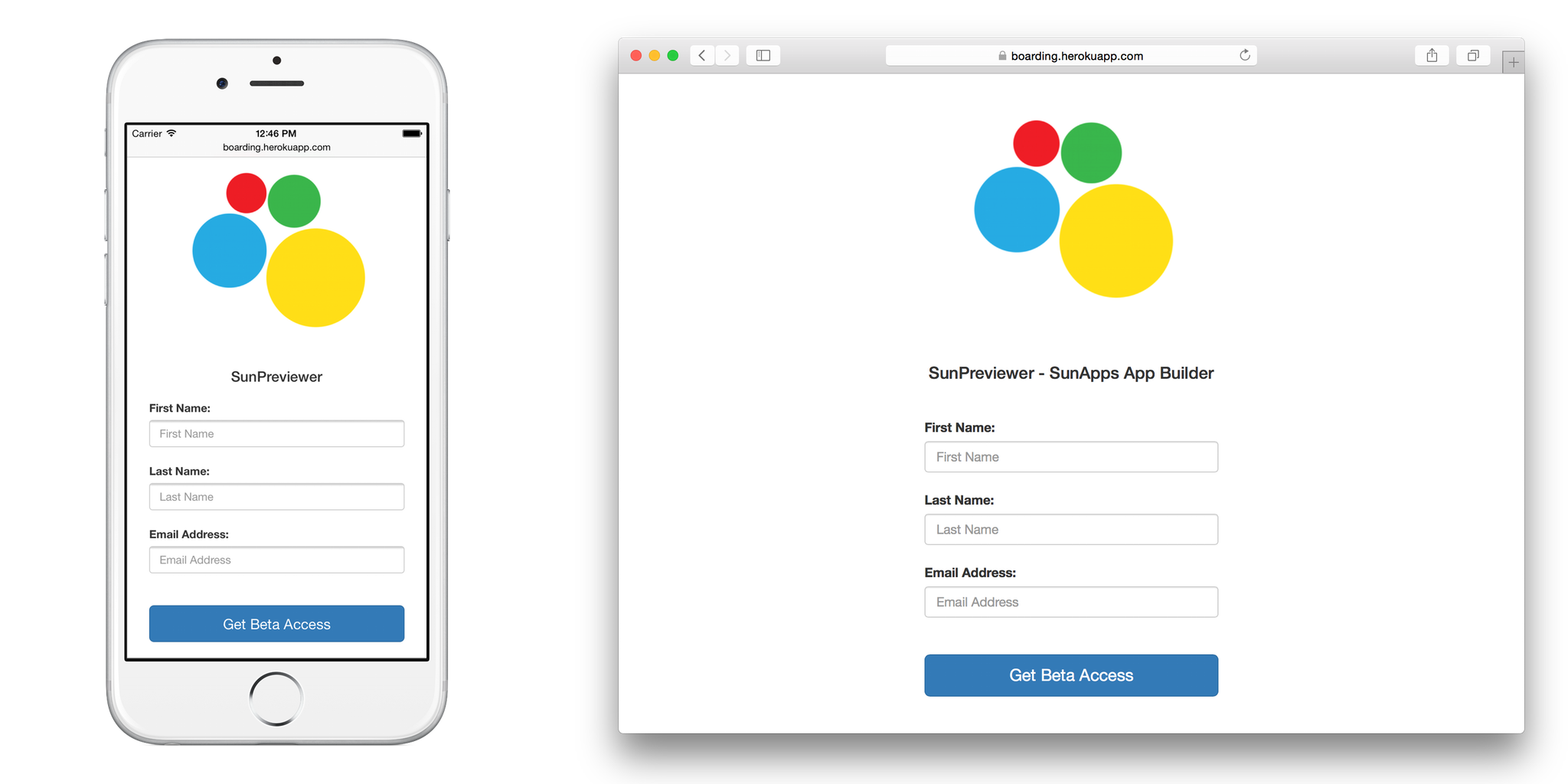
Check out the boarding GitHub repo for more information.
pilot
pilot is automatically installed with fastlane, you can use information technology to register individual testers to TestFlight
# Annals a new external tester fastlane pilot add email@invite.com # Annals a new external tester and add together them to your app fastlane airplane pilot add email@invite.com -a com.app.name Third party beta testing services
If you're using a 3rd party beta testing service, y'all'll need to manage your registered devices and their UDIDs. fastlane already supports device registrations and updating provisioning profiles out of the box.
lane :beta practice # Before calling match, we brand sure all our devices are registered on the Apple Programmer Portal register_devices(devices_file: "devices.txt") # After registering the new devices, we'll brand sure to update the provisioning profile if necessary # Notation how we brand certain to pass "adhoc" to get and use a provisioning contour for Ad Hoc distribution sync_code_signing(force_for_new_devices: true, type: "adhoc") build_app # ... cease The devices.txt should wait like this:
Device ID Device Name A123456789012345678901234567890123456789 DeviceName1 B123456789012345678901234567890123456789 DeviceName2 Incrementing the build number
Depending on the beta testing service you lot use, you'll take to increment the build number each time you upload a new build. This is a requirement for TestFlight for example.
To exercise so, there are some built-in fastlane deportment available, here are some examples
Fetching the latest build number from TestFlight
The code sample beneath will use the latest build number from TestFlight and temporarily set information technology.
lane :beta practise increment_build_number( build_number: latest_testflight_build_number + i, xcodeproj: "Instance.xcodeproj" ) cease Committing the build number to version control
The code sample beneath will increment the build number and commit the project changes to version control.
lane :beta practice # Ensure that your git status is non dingy ensure_git_status_clean # Increment the build number (not the version number) # Providing the xcodeproj is optional increment_build_number(xcodeproj: "Case.xcodeproj") # Commit the version bump commit_version_bump(xcodeproj: "Example.xcodeproj") # Add a git tag for this build. This will automatically # use an appropriate git tag name add_git_tag # Push the new commit and tag back to your git remote push_to_git_remote end For all the steps above, in that location are more than parameters bachelor, run the following to get a full list:
fastlane action [action_name] Use the number of commits
This isn't recommended, all the same some teams prefer this approach. You can use the number of commits of the current co-operative (via number_of_commits) as the build number. This will only work if you lot e'er run the build on the aforementioned branch.
lane :beta do increment_build_number(build_number: number_of_commits) end Source: https://docs.fastlane.tools/getting-started/ios/beta-deployment/
0 Response to "Fastlane How to Send Auto Invite After Uploading to Testflight"
Post a Comment